

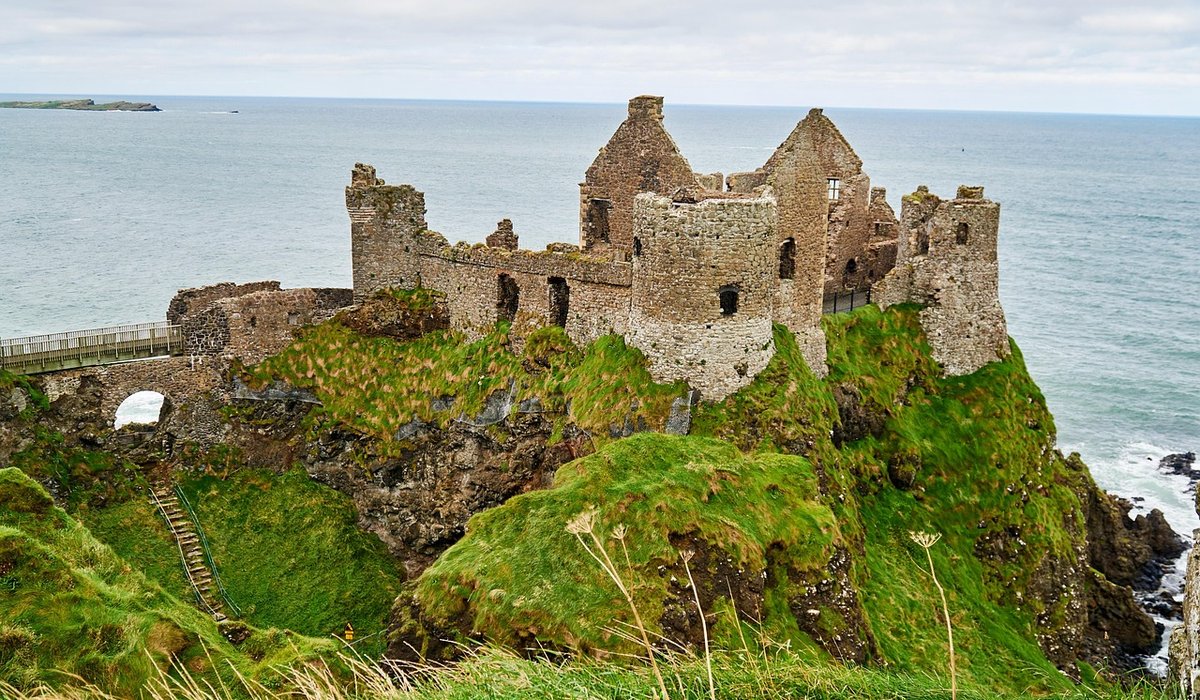
The Impact of the Norman Invasion on Ireland
A Conquest in Stages
In May 1169, a small force of Norman, Welsh and Flemish soldiers landed at Bannow Strand in County Wexford. They had been invited by Diarmait Mac Murchada, the exiled King of Leinster, who wanted his lands and authority restored. What began as a local feud quickly became a national transformation. The following year, Richard de Clare, known as Strongbow, arrived with a larger army and married Diarmait's daughter Aoife. By 1171, Henry II had crossed to Ireland to assert control over these ambitious lords. The invasion was not a single event but a rolling conquest that reshaped politics, land, towns and speech.
New Lords and a New Land System
The most immediate change was land ownership. The Normans introduced feudal tenure, a system of lords, knights and tenants bound by service and rent. Large tracts in Leinster, Meath and Munster were carved into manors and liberties. Gaelic lords who submitted might keep some land, but many were displaced. Castles rose at strategic points: motte-and-bailey earthworks gave way to stone keeps at places like Trim, Carrickfergus and Kilkenny. These strongholds anchored a new rural order of open fields, mills and churches. The old Gaelic pattern of cattle, clientship and scattered settlements did not vanish, but it now had to coexist with a written, document-driven system of charters and feudal courts.
Towns, Trade and the Urban Map
The Normans were town-builders. They granted borough charters, laid out streets and encouraged merchants from England, Wales and Flanders to settle. Ports such as Drogheda, New Ross, Waterford and Cork grew on the back of exports: wool, hides, grain and fish. Inland towns like Athlone, Kilkenny and Clonmel became market centres with walls, gates and fairs. Many Irish towns still carry this Norman footprint in their street patterns, medieval parish churches and names ending in -town or -castle. The urban network pulled Ireland closer to the English and continental economies, even as Gaelic Ireland remained largely rural.
Families That Shaped Ireland
Norman surnames became part of the Irish story. The FitzGeralds split into the Kildare and Desmond branches; the Butlers became Earls of Ormond; the Burkes dominated Connacht; the de Lacys held Meath; the Roches and Prendergasts settled in Munster and Wexford. Over generations, many of these families intermarried with Gaelic dynasties and adopted Irish customs, language and law. By the fourteenth century, critics complained that some were "more Irish than the Irish themselves". The Statutes of Kilkenny in 1366 tried to halt this Gaelicisation by banning Irish dress, language and marriage alliances, but the laws were unevenly enforced and often ignored. The result was a hybrid aristocracy that was neither wholly Norman nor wholly Gaelic.
Language, Law and the Pale
Norman French and Latin arrived with the administration, but English became the language of towns, markets and courts in the area around Dublin known as the Pale. Irish remained dominant elsewhere, and Norman French faded. The long contact produced Hiberno-English, with words and phrases borrowed from Irish and Norman French. Placenames tell the story: Butlerstown, Fitzgerald's Wood, Roche's Point. Surnames beginning with Fitz-, de or Burke are Norman gifts to Irish identity. The county system, sheriffs and a parliament at Dublin all owed something to the invasion. Yet the Gaelic lords retained their own law tracts and poetic traditions, so Ireland became a land of two overlapping legal and linguistic worlds.
The Long Legacy
The Norman invasion did not simply conquer Ireland; it layered it. It created new towns, new families and new tensions that shaped later conflicts, from the Tudor plantations to the wars of the seventeenth century. The Bruce invasion of 1315 and the Black Death weakened Norman lordships, allowing a Gaelic recovery. But the stones remained: castles, abbeys, town walls and parish churches. Today, visitors can trace the Norman thread in Wexford, Trim, Kilkenny and Carrickfergus. For anyone curious about Irish heritage, the Normans are not a distant footnote. They are written into the land, the family names, the street plans and the everyday speech of Ireland.


History
-
Monastic communities were centres of learning, farming, and prayer, providing shelter to travellers and preserving manuscripts during turbulent times.


Travel


-

Long established fact that a reader will be distracted
-

Long established fact that a reader will be distracted
-

Long established fact that a reader will be distracted


Genealogy
Karla Gleichauf
12 May 2017 at 05:28 pm
On the other hand, we denounce with righteous indignation and dislike men who are so beguiled and demoralized by the charms of pleasure of the moment
M Shyamalan
12 May 2017 at 05:28 pm
On the other hand, we denounce with righteous indignation and dislike men who are so beguiled and demoralized by the charms of pleasure of the moment
Liz Montano
12 May 2017 at 05:28 pm
On the other hand, we denounce with righteous indignation and dislike men who are so beguiled and demoralized by the charms of pleasure of the moment