

Understanding Place Names in the Irish Landscape
The Language Beneath the Map
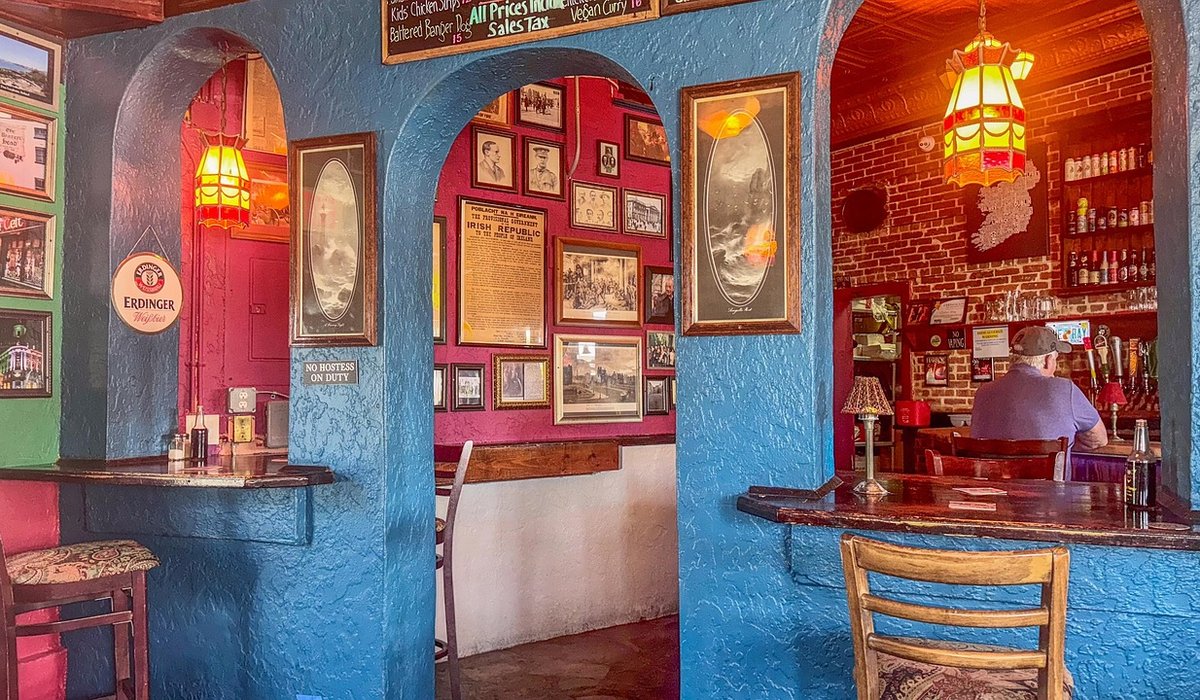
Every Irish place name tells a story. Whether you are driving through a village, climbing a mountain, or tracing a river on a map, the names you encounter are rarely arbitrary. Most derive from Irish (Gaeilge), often anglicised over centuries, and they describe the local geography, record an ancient event, or preserve a legend. For curious travellers and historians, learning to read these names is like gaining a second sight. The landscape stops being a backdrop and becomes a document written in a language of stone, water, and memory.
Understanding place names in Ireland is practical, not merely academic. A name can tell you what the land was like before drainage, where a ford once crossed a river, or which saint founded a monastery. It can also warn you that a road is named after a hill you are about to climb. This article offers a gentle introduction to the most common elements, so that your next journey through the Irish countryside is richer for the reading.
Common Building Blocks to Look For
Irish place names are built from a relatively small set of recurring words. Once you recognise a few, you can begin to decode names on signposts and maps. Here are some of the most useful:
- Baile (often anglicised as Bally-) – a townland, settlement, or homestead. Ballymena, Ballyjamesduff.
- Dún (Dun-) – a fort or fortified hill. Dún Laoghaire, Dungannon.
- Rath (Rath-) – a ringfort, a circular earthen enclosure. Rathfarnham, Rathmore.
- Cill (Kil-) – a church or churchyard. Killarney, Kilkenny.
- Áth (Ath-) – a ford, a shallow river crossing. Athlone, Athenry.
- Inis (Inis- or Ennis-) – an island or river meadow. Inis Mór, Ennis.
- Loch (Lough) – a lake or sea inlet. Lough Neagh, Lough Corrib.
- Carraig (Carrig- or Carrick-) – a rock or rocky outcrop. Carrigaline, Carrick-on-Suir.
Notice how many of these refer to defensible or sacred places. The frequency of dún, rath, and cill across the island reflects a past where security and faith shaped settlement. When you see a cluster of Bally- names, you are usually in an area of old townlands, each with its own identity.
Reading the Physical Landscape
Many Irish names are pure geography. They describe the shape of the land, its vegetation, or its water. For example, sliabh (anglicised as Slieve) means mountain, so Slieve Donard and Slieve Bloom are self-explanatory. Gleann (Glen) is a valley – Glenmalure in Wicklow, Glenveagh in Donegal. Ros is a headland or promontory, as in Rosscarbery. Trá (Traw- or Tra-) is a beach or strand, found in names like Tramore.
Trees and plants also feature strongly. Doire means oak wood, giving us Derry and Derrybeg. Móin is a bog or peatland, seen in Moycullen and Moy. Cluain is a meadow or pasture, as in Clonmel. These words are not poetic flourishes; they were practical descriptions. If you are walking in a place called Cluain, expect flat, grassy ground. If you are in a Doire, there may once have been a great oak forest. The names allow you to reconstruct the past landscape in your mind’s eye.
Layers of History and Legend
Irish place names also carry historical and mythological weight. Some record early Christian foundations: Cill Dara (Kildare) means ‘church of the oak’, while Cill Chainnigh (Kilkenny) means ‘church of Cainneach’, a sixth-century saint. Others preserve pre-Christian mythology. Teamhair (Tara) was the seat of the high kings. Emain Macha (Navan Fort) is linked to the Ulster Cycle of tales. Brú na Bóinne (Newgrange) means ‘mansion of the Boyne’ and is older than the pyramids.
Later arrivals left their mark too. Norse settlers gave us Dubh Linn (black pool), which became Dublin, and Waesfjord (bay of the mudflats), now Wexford. The Norman and Tudor plantations introduced English names, but even these often sat on top of older Irish ones. A single place can have three or four layers of naming, like a palimpsest. When you see a name that seems odd or out of place, it is worth asking what came before.
Practical Tips for Curious Travellers
You do not need to be a linguist to enjoy this. Start by looking at bilingual road signs, which are common in many parts of Ireland. The Irish version is usually the original, and the English is an anglicisation. Compare them: Baile Átha Cliath (Dublin) means ‘town of the hurdled ford’. Notice the Áth in the middle. On maps, look for recurring prefixes and suffixes. A little glossary of place name elements, kept on your phone or in a notebook, will pay dividends.
Ask locals. Many Irish people are proud of their local names and will happily explain what they mean, often with a story attached. Listen to pronunciation, too. The stress and vowel sounds of Irish can reveal connections that spelling obscures. Knock comes from Cnoc (hill). Doon comes from Dún. Gort means a field. Once you start noticing these patterns, you cannot unsee them. The landscape becomes a living dictionary, and every journey a lesson in heritage.
Finally, treat names with respect. They are not just labels; they are inheritances. By taking the time to understand them, you honour the generations who named these places and keep their stories alive.


History
-
From lively reels to sorrowful airs, the fiddle has shaped Irish sessions for centuries and remains a central instrument.

Travel


-

Long established fact that a reader will be distracted
-

Long established fact that a reader will be distracted
-

Long established fact that a reader will be distracted

Genealogy
Karla Gleichauf
12 May 2017 at 05:28 pm
On the other hand, we denounce with righteous indignation and dislike men who are so beguiled and demoralized by the charms of pleasure of the moment
M Shyamalan
12 May 2017 at 05:28 pm
On the other hand, we denounce with righteous indignation and dislike men who are so beguiled and demoralized by the charms of pleasure of the moment
Liz Montano
12 May 2017 at 05:28 pm
On the other hand, we denounce with righteous indignation and dislike men who are so beguiled and demoralized by the charms of pleasure of the moment